Urban Transformation in Prime Locations: Cost Minimization or Value Maximization?
In real estate, every decision is ultimately a capital allocation strategy.
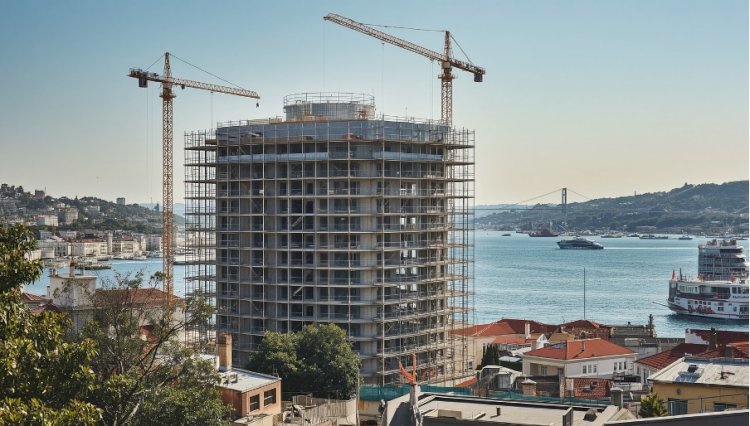
In real estate, every decision is ultimately a capital allocation strategy.
Nowhere is this more evident than in prime urban districts like Besiktas, Istanbul—where the margin between an average project and an exceptional one can translate into a significant difference in long-term wealth.
When a building enters an urban transformation process, stakeholders often face a familiar dilemma:
Should the focus be on minimizing construction costs, or on maximizing the asset’s future value?
At first glance, cost control appears rational. Lower upfront expenditure reduces immediate financial pressure and may seem like a safer route.
However, in high-demand, supply-constrained markets, this approach can be fundamentally short-sighted.
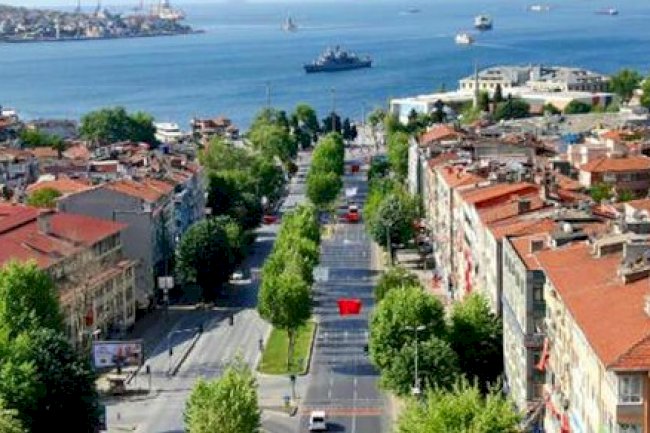
Besiktas is not a typical residential district.
It is one of Istanbul’s most prestigious and supply-limited locations, where property is not merely purchased for shelter, but for lifestyle, status, and long-term value preservation.
In such markets, quality is not a luxury—it is a pricing driver.
A well-conceived, design-led, and user-centric development can command a significant premium.
Even a 15–20% increase in perceived quality can translate directly into higher demand, faster absorption rates, and materially stronger sale prices.
Conversely, a project that fails to meet the expectations of the area—no matter how cost-efficient—risks underperforming.
A similar 15–20% drop in demand due to compromised quality can erode value at scale, particularly in markets where the absolute price levels are already high.
The key insight is this:
In prime locations, small percentage shifts create large absolute financial outcomes.
From an on-the-ground perspective, one recurring issue stands out:
Even in top-tier neighborhoods, some developments fail to align with the local market’s lifestyle expectations. These projects often struggle with positioning, pricing, and ultimately liquidity.
This misalignment is costly.
Because in Besiktas, buyers are not evaluating properties solely on square meters or floor plans.
They are evaluating how a property fits into—and enhances—their way of living.
They seek developments that reflect the identity of the location, offer differentiated experiences, and deliver a sense of long-term value.
Projects that lack these attributes, regardless of their cost efficiency, tend to fall behind in a competitive landscape.
For property owners and investors entering an urban transformation process, the implication is clear:
The objective should not be to build at the lowest possible cost, but to create the highest possible value.
This requires a shift in mindset—from short-term savings to long-term positioning.
From construction cost per square meter to value per square meter.
In global real estate markets, the most successful developments share a common principle:
They are built not just to exist, but to outperform.
Besiktas is no exception.
In a market where demand is sophisticated and expectations are high, the right project is more than a structure—
it is a strategic asset designed to generate superior returns.
And in that context, value maximization is not an option.
It is the only rational strategy.
besiktassatilikdaire.com.tr/en
What's Your Reaction?